Coated Calcium Carbonate
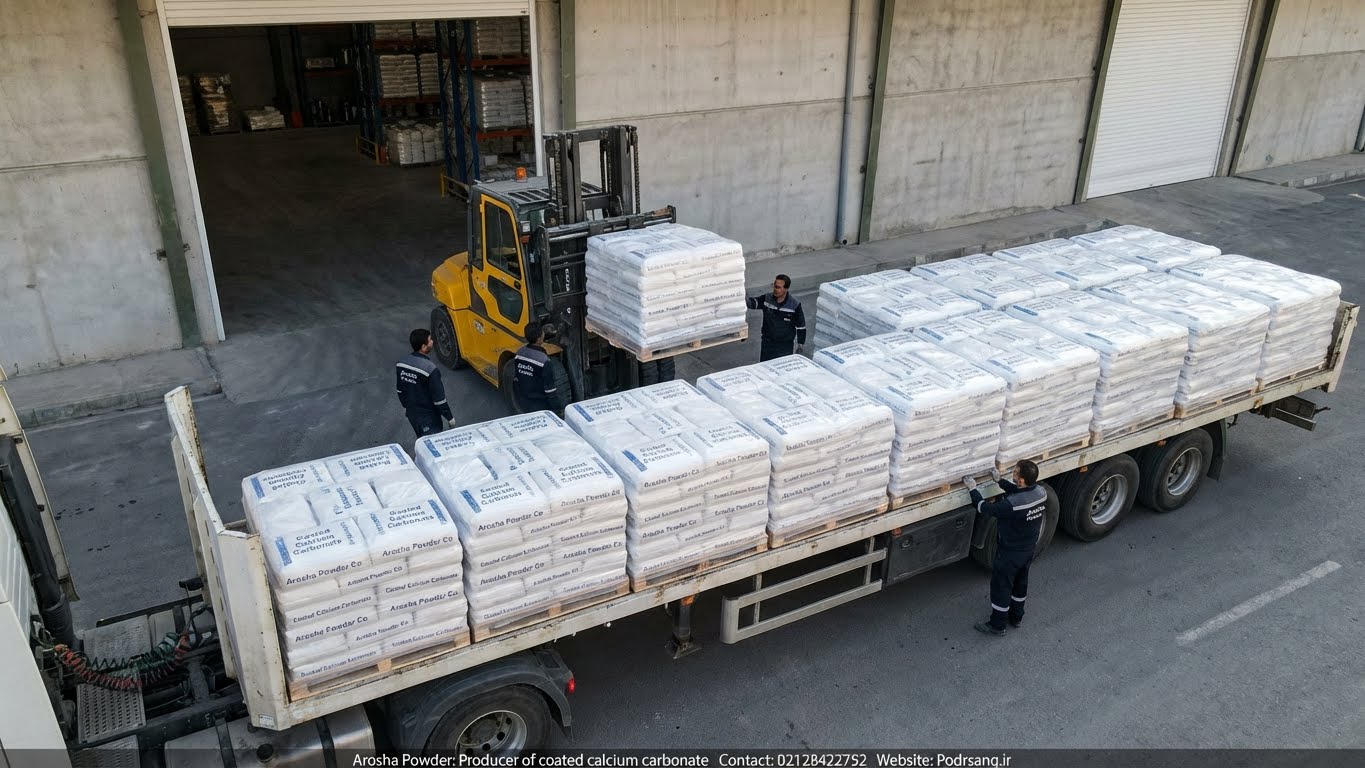
Coated calcium carbonate is a/are/was a versatile substance with a wide range of purposes. It includes primary calcium carbonate particles that are coated with a thin layer of inorganic substances. This layer can be tailored to achieve specific properties, such as improved flowability.
Coated calcium carbonate finds use/application/employment in a variety/range of industries. In the printing industry, it is used as a filler to improve brightness. In the resin industry, it enhances the performance of goods. In the coating industry, it is used as a additive to lower the cost and improve the appearance of paints.
Advances in Coated Calcium Carbonate Technology
Coated calcium carbonate (CCC) has emerged as a versatile material with extensive applications in industries such as printing, plastics, and pharmaceuticals. Recent advances in CCC technology have led to noticeable improvements in its efficacy. These advancements include the use of novel coating materials, such as silanes and organic polymers, which enhance the adhesion of CCC with various substrates.
Additionally, researchers are exploring sustainable methods for producing and manipulating CCC, aiming to minimize its environmental impact. The emerging coated calcium carbonate materials exhibit superior properties, such as increased brightness, opacity, and printability. These innovations are paving the way for the development of next-generation CCC products with significantly improved performance characteristics.
Treating Surfaces of Calcium Carbonate for Enhanced Performance
Calcium carbonate (CaCO3) is a widely utilized material owing to its diverse applications in industries ranging from construction to pharmaceuticals. However, the performance of CaCO3 can often be restricted by inherent properties such as low surface area and reactivity. To overcome these limitations, researchers have explored various methods for treating its surface characteristics. Surface modification techniques, which involve introducing functional groups or coatings onto the CaCO3 surface, can significantly enhance its properties, leading to improved performance in a variety of applications.
Strategies for Coating Calcium Carbonate Pigments
Employing various coating strategies is essential for optimizing the characteristics of calcium carbonate pigments. These methods intend to modify the surface properties of the pigment particles, consequently affecting their suspension, bonding, and comprehensive performance in various applications. Common coating substances include silica, which can provide improved stability. The selection of the most appropriate coating strategy depends on the particular application requirements and the sought attributes of the final product.
Impact of Coating on Rheological Properties of Calcium Carbonate Filled Polymers
Calcium carbonate (CaCO3) is a widely used filler in polymer composites due to its economical nature. However, the addition of CaCO3 can negatively impact the rheological properties of polymers. Coatings on CaCO3 particles have been shown to minimize these negative effects by improving interfacial interactions between the filler and the polymer matrix. This review article examines the current trends in coating technologies for CaCO3-filled polymers, focusing on their effect on rheological properties such as viscosity, yield stress, and elastic modulus.
Impact of Coated Calcium Carbonate on Paper Properties
Coated calcium carbonate (GCC) acts a crucial function in modifying the optical properties of paper. Adding GCC to the paper creation process remarkably enhances the printability, opacity, and smoothness of the final product.
GCC particles, with their high surface area and refractive index, effectively fill light, resulting in a whiter and more opaque paper sheet. Furthermore, GCC improves the paper's durability by providing structural support.
, Consequently, the use of GCC in paper creation leads to a enhanced quality product that satisfies the demands of various printing and writing applications.
Coated Calcium Carbonate: A Sustainable Alternative to Conventional Fillers
Conventional fillers often rely on limited resources, posing a threat to the environment. Fortunately, coated calcium carbonate presents a sustainable alternative. This versatile filler provides numerous benefits, including improved strength and enhanced adhesion in various applications. Coated calcium carbonate's unique properties make it a valuable solution for industries seeking to minimize their environmental impact without sacrificing product quality.
Assessing the Ecological Footprint of Coated Calcium Carbonate Production
Coated calcium carbonate (CCC) serves as a key component in numerous industrial applications. However, the production process presents both advantages and drawbacks on the environment. One major concern is the demand for fossil fuels during mining, processing, and coating stages. Furthermore, waste products are generated throughout the production cycle, posing risks to human health. In addition, managing byproducts can pose environmental hazards if not handled properly.
It is therefore essential to adopt environmentally friendly methods of CCC production. This includes optimizing energy efficiency, reducing waste generation, and exploring alternative raw materials. By embracing responsible manufacturing, the environmental impact of coated calcium carbonate production can be significantly reduced.
Calcium Carbonate Coatings and Biodegradability
Biodegradable materials possess a vital role in our expanding global demand for sustainable solutions. Amongst these materials, coated calcium carbonate functions as a key component. This layer strengthens the physical properties of biodegradable plastics, leading in increased resistance. The application of coated calcium carbonate also reduces the total environmental influence of these materials.
Adjusting Coating Parameters for Enhanced Dispersion of Calcium Carbonate
Achieving optimal dispersion of calcium carbonate within a coating formulation is crucial for achieving desired performance characteristics. This can be influenced by carefully choosing the appropriate coating parameters. Variables such as diameter, chemical composition, and agitation intensity can significantly impact the dispersion process. Employing systematic experimentation and analysis, engineers can adjust these parameters to achieve a homogeneous distribution of calcium carbonate particles within the coating matrix. This leads to improved film quality, including stronger bonding and smaller pore size.
Nanocoatings for Calcium Carbonate Particles
Calcium carbonate compounds play a vital role in numerous industrial applications, ranging from construction materials to food additives. To enhance their performance and broaden their scope, nanotechnology-based coatings have emerged as a promising strategy. These coatings can improve the mechanical, optical, and chemical properties of calcium carbonate particles. For instance, nanocomposite coatings can increase particle strength and durability, while ceramic coatings can modify their surface characteristics. The development of tailored nanotechnology-based coatings offers a dynamic platform for optimizing the performance of calcium carbonate particles in diverse applications.
Characterization Techniques for Coated Calcium Carbonate
Coated calcium carbonate (CCC) is a/are/have become widely utilized/used/implemented in various industries due to its exceptional properties. To ensure the quality and performance of CCC, accurate/precise/reliable characterization techniques are essential/crucial/necessary. These methods allow for the determination/measurement/assessment of key parameters such as particle size distribution, surface area, porosity, and the properties of the coating/layer/shell. Common characterization techniques include/comprise/encompass microscopy, X-ray diffraction (XRD), Brunauer-Emmett-Teller (BET) analysis, and dynamic light scattering (DLS). Microscopy provides visual/graphical/optical information about particle morphology and coating thickness. XRD reveals/identifies/determines the crystal structure of both the calcium carbonate and the coating material. BET analysis measures surface area and porosity, while DLS determines particle size distribution in suspension.
By employing/utilizing/applying these techniques, manufacturers can optimize/fine-tune/adjust the properties of CCC to meet specific application requirements.
applications of Coated Calcium Carbonate in the Cosmetics Industry
Coated calcium carbonate serves a crucial role in the cosmetics industry, delivering a variety of favorable properties. It is widely utilized in formulations for its exceptional aesthetic characteristics, including brightness and coverage. Moreover, coated calcium carbonate improves the texture of beauty products, causing a smoother and enhanced application sensation.
The flexibility of coated calcium carbonate allows its integration into a diverse spectrum of cosmetic {applications|, such as|including|:
* **Skincare products**: Serums, moisturizers, and sunscreens can benefit from the shielding characteristics of coated calcium carbonate.
* **Makeup products**: Foundations, concealers, and powders often utilize coated calcium carbonate to enhance their coverage.
* **Hair care products**: Shampoos, conditioners, and styling treatments may use coated calcium carbonate to add volume and gloss to hair.
Calcium Carbonate Coating: A Multifaceted Addition to Food Products
Coated calcium carbonate is a versatile additive in the food industry. This ultra-fine powder provides a range of benefits to food products, enhancing their texture, look, and shelf life. It acts as an ideal thickening agent in various applications, like baked goods, dairy products, and processed meats. The coating process guarantees improved distribution within food matrices, resulting in a more consistent and appealing final product.
The Impact of Coated Calcium Carbonate Fillers on Product Performance
The durability of coated calcium carbonate fillers is a crucial factor in determining their suitability for various applications. These fillers, often used in paints, plastics, and paper, demand specific coatings to enhance their resistance against environmental factors and mechanical stress. The choice of coating material and its application process significantly influence the long-term stability and durability of the fillers.
Factors such as temperature, humidity, and UV exposure can affect the performance of coated calcium carbonate fillers over time. Moreover, mechanical stress during processing and use can also compromise their stability.
Enhance Pigment Performance with Surface Treated Calcium Carbonate
Calcium carbonate (CaCO3) is Coated Calcium Carbonate a widely utilized filler in the pigment industry. Its cost-effectiveness and inherent properties make it an attractive choice for various applications. However, unmodified calcium carbonate can sometimes lead to suboptimal pigment performance due to factors like poor dispersion and limited interaction with pigments. Surface treatment of calcium carbonate offers a solution to enhance its compatibility and functionality within pigment formulations.
By introducing specific surface modifications, such as coupling agents or organic coatings, the inherent properties of calcium carbonate can be tailored to improve pigment performance. These treatments facilitate better dispersion, reduce agglomeration, and enhance interaction between pigments and the surrounding matrix. As a result, treated calcium carbonate contributes to improved color intensity, brightness, and overall aesthetic quality in pigmented products.
- Improved Dispersion: Surface treatment enhances the dispersibility of calcium carbonate particles within the pigment matrix, leading to more uniform distribution and reduced settling.
- Enhanced Pigment-Binder Interaction: Modifications on the calcium carbonate surface can promote stronger interactions with the binder system, improving adhesion and durability of the pigment film.
- Increased Color Strength: By optimizing pigment dispersion and interaction, surface treated calcium carbonate contributes to a higher level of color intensity and saturation in pigmented products.
A Coating of Calcium Carbonate
Calcium carbonate coating is a flexible solution that offers benefits to both the functionality and aesthetics of various materials. This film provides a durable barrier against wear, extending the lifespan of products. Furthermore, calcium carbonate coating can adjust the surface properties of materials, improving their strength. From architectural applications to consumer goods, calcium carbonate coating has become a popular choice for its effectiveness.
Challenges and Opportunities in Coated Calcium Carbonate Study
Coated calcium carbonate (CCC) has emerged as a vital ingredient in various industrial applications, characterized by its unique properties. The realm of CCC exploration is continually evolving, presenting both noteworthy challenges and intriguing opportunities.
One major challenge lies in the enhancement of coating processes to achieve targeted properties like particle size distribution, surface morphology, and chemical composition. The multifaceted nature of these interactions requires sophisticated analytical techniques and modeling methods.
However, the promise for innovation in CCC technology is immense. There's a growing demand for environmentally conscious solutions, and CCC offers a promising route to decrease environmental impact by utilizing abundant calcium carbonate resources and minimizing waste generation.
Furthermore, the development of novel coating materials and functionalization strategies holds the key to unlocking novel applications in fields such as materials science.
The Future of Coated Calcium Carbonate Technology
As production continues to evolve, coated calcium carbonate (CCC) stands as a vital component in countless applications.
Upcoming developments in CCC technology are poised to enhance various sectors, from packaging to textiles. Engineers are constantly investigating novel formulations to enhance the durability of CCC. These efforts are driven by a growing requirement for sustainable and high-performing materials.
A key area of focus is the synthesis of CCC with enhanced surface properties. This includes altering the particle size distribution, outer roughness, and chemical composition. Such enhancements can lead to substantial benefits in terms of adhesion, distribution, and integration with various matrices.
- Additionally, researchers are exploring the use of renewable sources for producing CCC. This strategy has the potential to minimize the environmental impact of CCC production.
- Moreover, advancements in production techniques are driving increased efficiency and control over CCC properties. This allows for the manufacture of tailored formulations that specifically meet the needs of numerous industries.
Considering ahead, the future of coated calcium carbonate technology is promising. Persistent innovation and partnership between scientists, industry leaders, and regulatory bodies will be crucial in shaping the direction of this vital material.
Methods for Customized Properties of Calcium Carbonate
Calcium carbonate (CaCO3) is a widespread mineral with a varied range of applications. Although it inherent properties can sometimes be restricting for certain uses. To overcome these limitations and optimize its performance in specific applications, various coating strategies have been utilized. These strategies involve the application of a thin layer of material onto the surface of calcium carbonate, resulting in changed properties such as hardness, chemicalinertness, and top characteristics.
- Coating materials can be chosen to intentionally address the desired property modifications.
- For example,In particular,Specifically, a silica coating can boost the impact resistance of calcium carbonate, making it suitable for use in applications requiring high durability.
- Furthermore,Moreover,Additionally, a hydrophobic coating can be applied to minimize water absorption and improve the reliability of calcium carbonate in humid environments.
Comprehending the effects of different coating strategies on the properties of calcium carbonate is crucial for selecting the best solution for a particular application.